
Transylvania
Things to Do in Cluj-Napoca: Sights, Walks and Nearby Outings
We may earn a commission from some links on this page.
The short answer
Walk the central squares, then choose a longer stop at a park, museum or the Botanical Garden. Stay near the area you will use most. Plan the station connection and Turda excursion separately.
What's covered9
By Unseen Romania · Updated
For things to do in Cluj Napoca, start at Union Square, walk towards Museum Square, then choose a park or the Botanical Garden. Give Turda Salt Mine its own outing. Leave time for the city's streets and meals as well as onward regional travel.
Choose a Cluj visit
Choose Cluj for its city life, central squares and green spaces. The visit can be as simple as a good walk and a meal, or it can include a museum and a longer garden stop. Give each choice enough time. Avoid trying to see each named place in one loop.
Begin with the clear time available after arrival and before departure. If those are your only periods, a central walk may be the strongest plan. Adding Turda can leave little of Cluj itself once the road trip and mine entry are included.
Use VisitCluj for city orientation. It identifies Union Square, Central Park, Cetățuia and the Botanical Garden among the city's visitor choices. Use each site's own page for current entry. Avoid treating the city list as a timetable.
If you are joining a wider Transylvania route, decide which towns you will sleep in. Cluj can be a good northern base. But it is not an efficient return point for each Brașov-area visit. The city's appeal should lead the stay as much as the onward trip.
City sights in walking order
1. Begin in Union Square
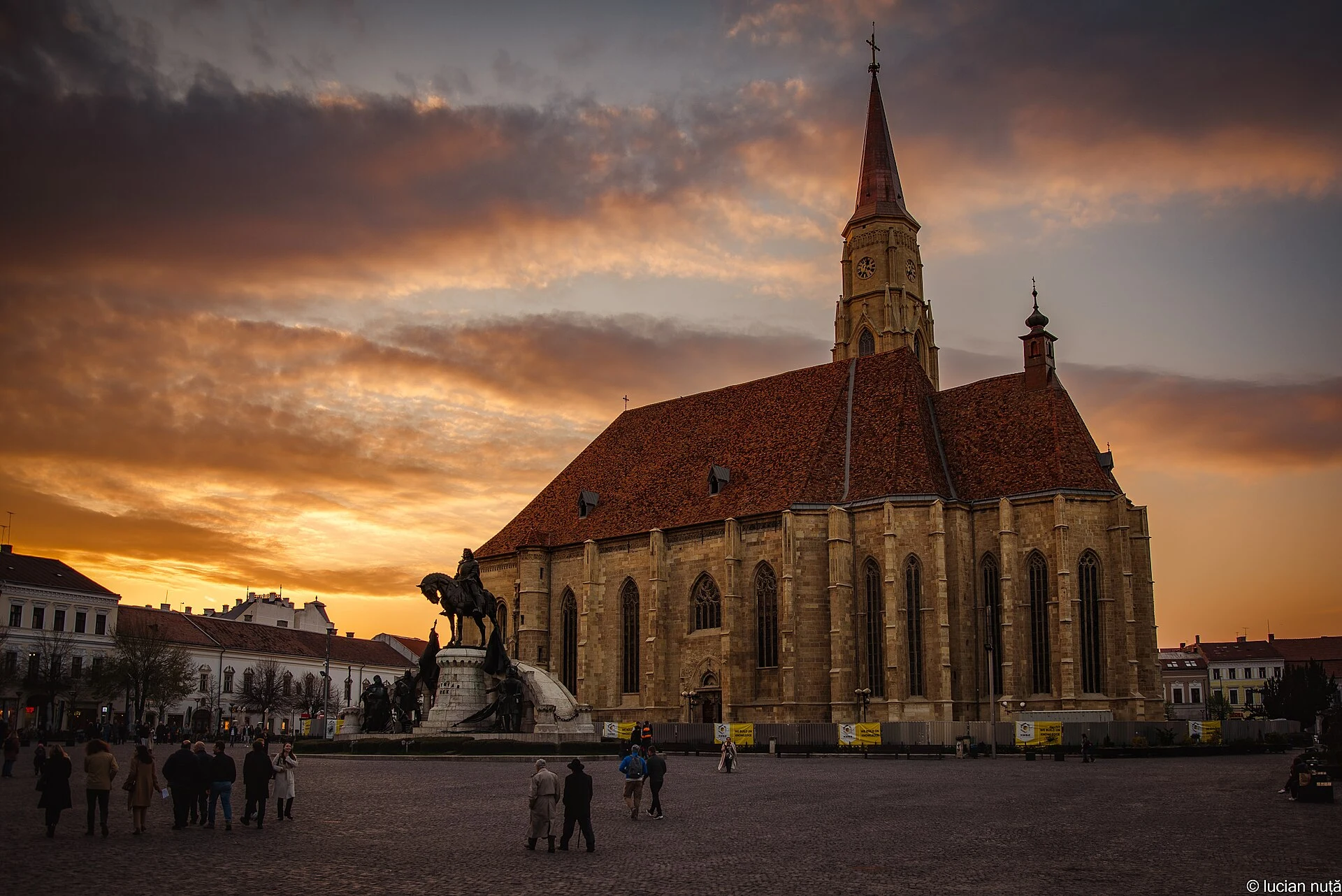
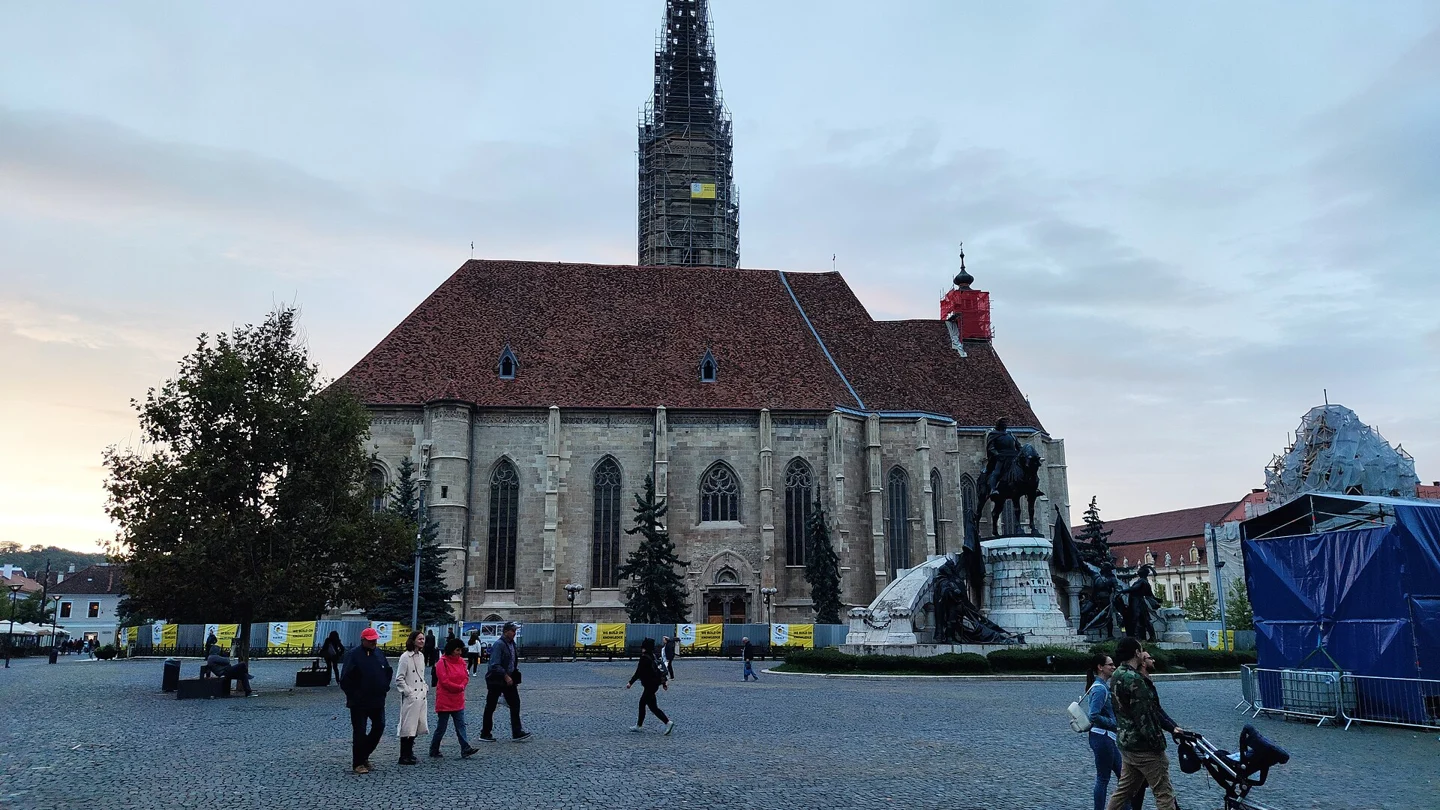
Piața Unirii is a clear starting point. Use it to understand the centre before moving towards smaller streets. Look at the square as a whole, with St Michael's Church as a major anchor.
Choose a meeting point if the group separates. A named corner or entrance is easier to find than somewhere near the church. Keep any timed interior visit close to the walk's exact sequence.
The square does not need a numerical superlative to be worth your time. Its value in the visit is its layout, buildings and role as a centre. A slow look can tell you more than a checklist of record claims.
2. Distinguish the church exterior from entry
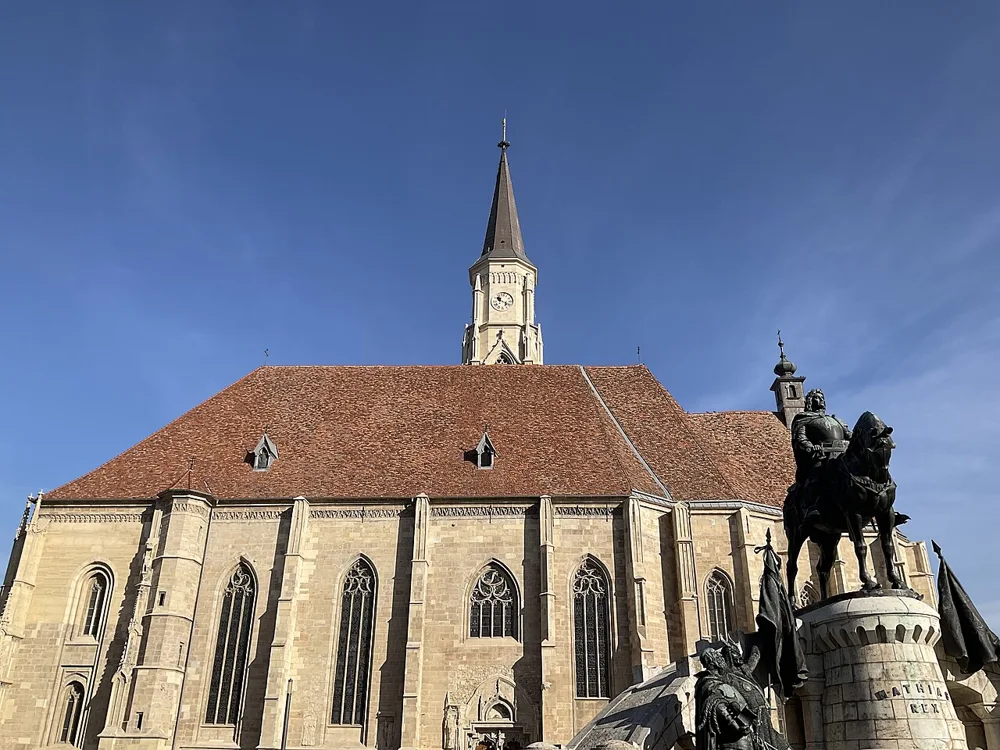
The church helps orient the square walk. If you want an interior visit, check the current plans and any worship limits. Passing a building on a city route does not establish entry.
Choose what interests you inside. Avoid treating entry as mandatory. Some visitors will prefer a museum. Meanwhile, others may keep the whole walk outdoors. A good first visit can have a clear shape without each door being open.
Follow posted visiting and photography rules in the church. Worship can limit access even when the public square outside remains open.
3. Compare a museum stop near the centre
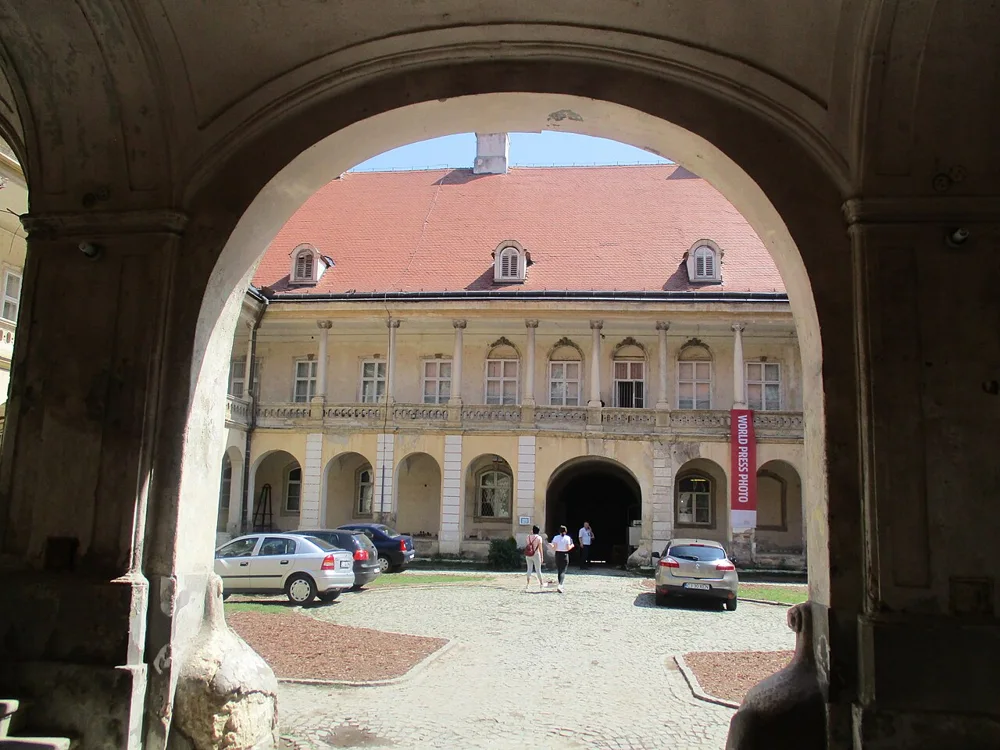
The Bánffy Palace setting and the city's art-museum choice belong in the central part of the plan. Check the Cluj Art Museum for the exact exhibition and visitor details before building the day around an interior.
Choose a museum for its subject, not simply because you need an indoor box on the plan. A temporary exhibition can differ from a permanent collection. Read what is being shown. Allow the visit its own pace.
If the museum does not fit the day, retain the walk. Do not replace one uncertain door with a long trip to another site whose hours you have not checked. A shorter coherent route can be more rewarding than a series of rushed substitutions.
4. Continue towards Museum Square
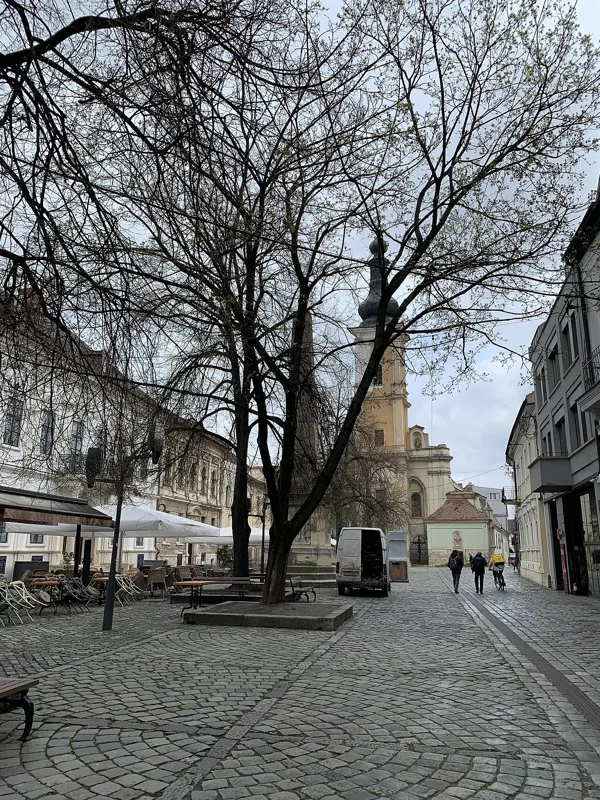


Move through the central streets towards Piața Muzeului. This gives a smaller-scale contrast with Union Square. The route between the two is part of the visit. The connecting streets are worth looking at too.
Look at the streets and building fronts as you walk. Choose a café or meal in the area you are already using if that suits the day. A fixed reservation elsewhere can pull a short visit out of shape.
The Matthias Corvinus House area is another orientation point. But check any interior on its own. A building's place in a historic walk does not mean that each room is a public site on your date.
5. Add Central Park
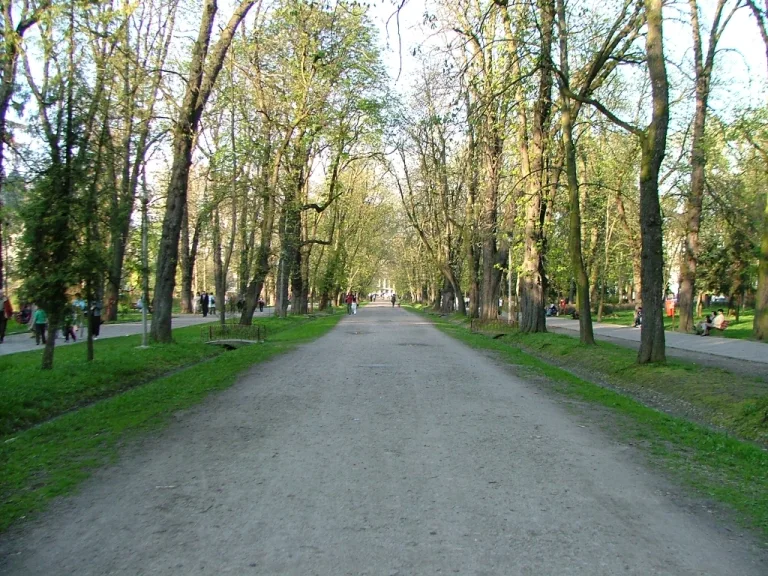

Central Park gives the day a more open setting after the streets and squares. Choose it if a slower outdoor period suits the group. It can be a good pause. There is no need to rush through it.
Check the weather before extending the walk. A park option is flexible. But it is still outdoors. Keep a shorter return if rain, cold or the group's energy makes the full loop less appealing.
Do not assume each café, event or activity shown in a park photo is operating. Choose the park for the space itself. Then add a service only when it is open on the day.
6. Treat Cetățuia as a separate ascent choice
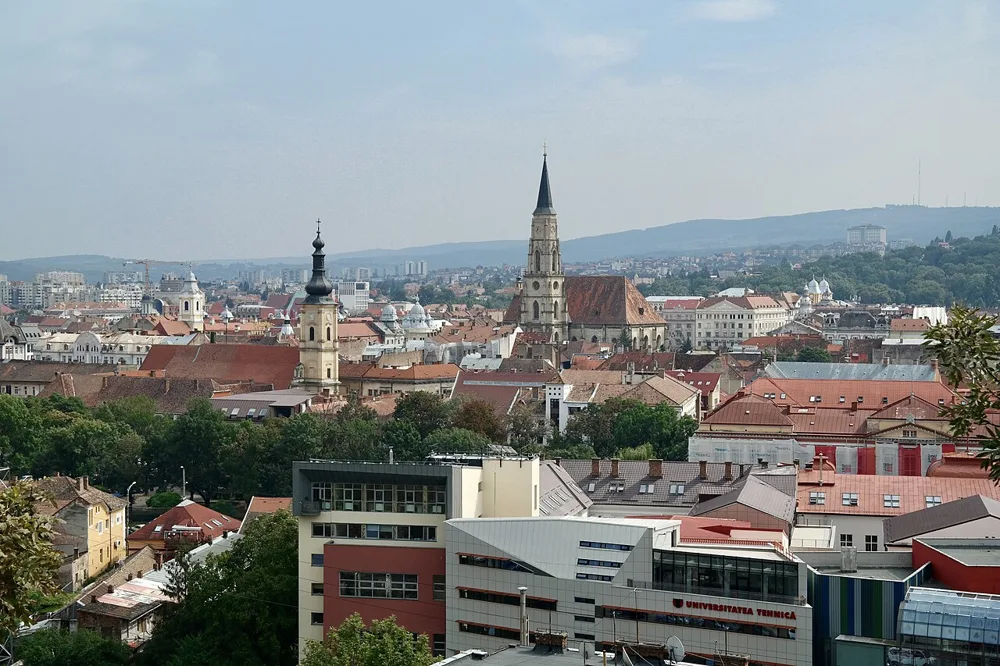

Cetățuia offers a view above the city. Assess the steps, approach and return before adding it, especially for anyone with a limited walking range. It requires an ascent beyond the central walk.
If the group does not want the ascent, finish the central route instead. The squares and park already give the visit variety. A high view is optional, not evidence that a lower-level city day is incomplete.
7. Give the Botanical Garden its own time
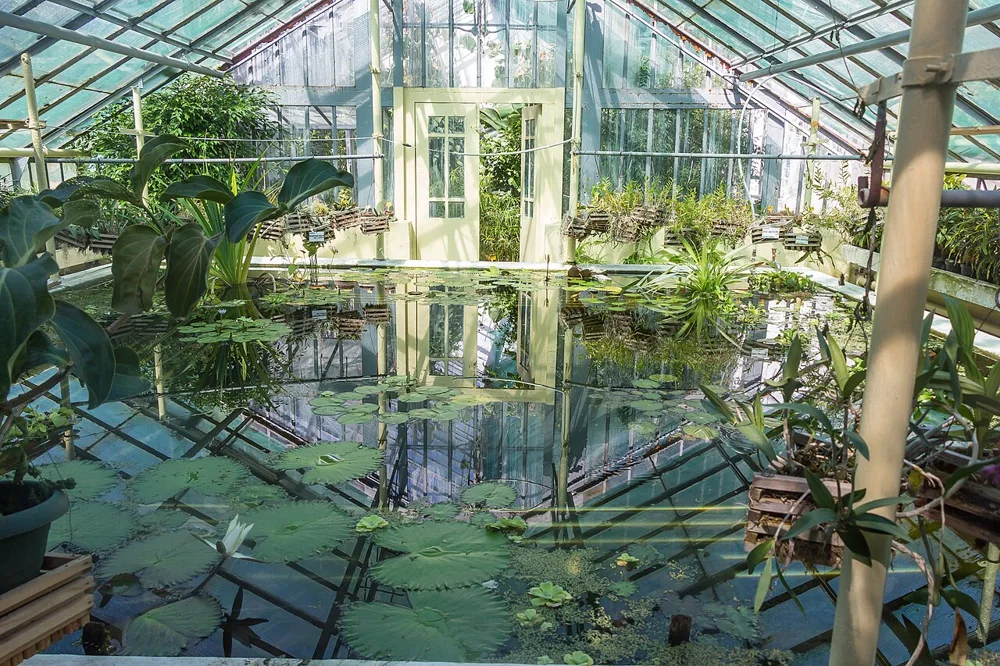

The Alexandru Borza Botanical Garden belongs to Babeș-Bolyai University. Its own site explains the garden's research and educational role and identifies entry areas.
Give the garden a longer stop rather than a quick gap between trains. Greenhouses can have separate access hours, and general garden admission does not establish that every indoor display is open.
The garden site describes areas including a Japanese garden and a water tower. Use the current visitor map to choose a manageable route through the parts that are accessible.
A real walking and orientation map
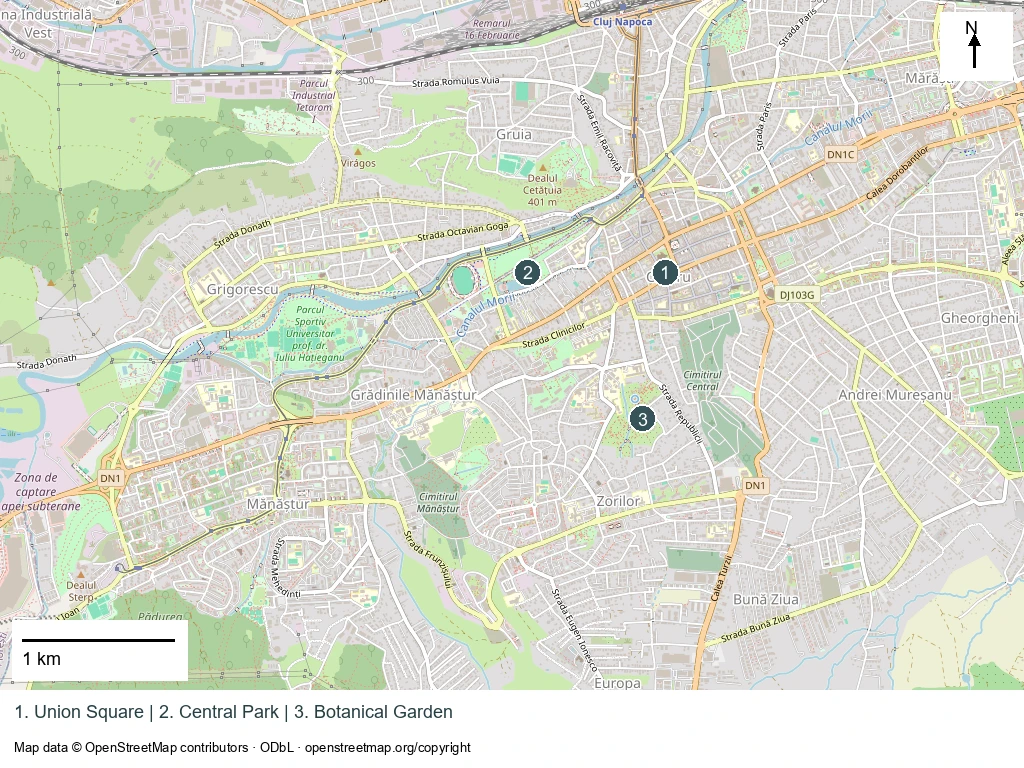
The map locates Union Square, Central Park and the Botanical Garden. The garden needs a separate walk or local ride from the squares. The map gives orientation rather than measured walking times or an assessment of steps.
For a compact first walk, connect Union Square, a central museum and Museum Square. Add the park for more outdoor time, or give the garden a separate half-day as a suggested allowance. Choose one longer focus rather than rushing every option.
For a short arrival day, stop while the route is still enjoyable. Save a longer visit for the next morning if you have one. A good city plan has a natural end. Avoid requiring the last site regardless of tiredness.
For access needs, ask about museum entrances and garden paths separately from the public squares. Assess the route you intend to use rather than relying on one broad accessibility label.
Base areas and practical transport
| Base choice | Useful for | Main check | Trade-off |
|---|---|---|---|
| Central streets | Walks, meals and short returns to the room | Noise, entrance and bags | Vehicle access may need a separate plan |
| Near the railway arrival | A rail-focused overnight | Current local journey to the centre | Not the same as sleeping beside the main squares |
| Park-side area | An outdoor-led city routine | The exact walk to the sights | A broad neighbourhood label can hide different distances |
| A road-access-oriented property | A wider driving route | Parking and the repeated trip into town | Arrival ease may weaken the central stay |
Scroll for more →
Use CFR for chosen-date trains and CTP Cluj for the current local network. Read the exact stop and direction. Avoid relying on a route number from a past visit.
If arriving with bags, check reception and storage before choosing a day plan. A room's check-in time can create a gap between the train and access to the room. Solve that gap before leaving for a longer outing.
For driving, establish the vehicle entrance as well as the room address. Hotel Transilvania identifies a separate parking entrance on Strada Cotită.
Food and short-stay planning
Keep lunch near the part of town you are exploring. Check the exact menu and opening. Avoid assuming each central business serves the same kind of meal. If dietary needs matter, ask about ingredients and preparation.
Restaurant Mina at Hotel Transilvania is a named central dining option to investigate on the Regele Ferdinand side of the walk. Compare the menu and exact operating plans. Avoid treating a hotel restaurant as always suitable for each meal.
For a first day, arrive, leave bags and take the compact central walk. For another clear period, choose the garden or an indoor visit. Add a park pause when weather suits. These are sequences, not a promise about any site's hours.
For a suggested two-night stay, walk Union Square and Museum Square on arrival afternoon, with dinner nearby. Use the next morning for the Botanical Garden, then return for a slower park walk or an art-museum visit if its programme interests you. Keep departure morning near the room and station connection. If Turda is the main reason for coming, add a full excursion day or replace the garden day rather than squeezing the mine between checkout and a train. This leaves time for the intercity road leg and local mine approach in both directions.
For a departure day, keep the final stop close enough to collect bags and reach the station. A pleasant morning can become a rushed one if you put the garden or a distant meal between checkout and a fixed train.
Turda and other nearby options
Give Salina Turda its own outing, arranging the entrance and admission separately from road transport. A mine ticket alone does not include travel from Cluj.
The mine's official access page identifies two entrances and a limited route for visitors with mobility needs. Choose the appropriate entrance before arranging transport.
Entrance A is at Aleea Durgăului 7 and Entrance B at Strada Salinelor 54B. The mine directs its limited accessible route through the old entrance. Give the driver the chosen entrance rather than Turda town alone, and establish where to meet for the return after leaving the underground route.
Plan an added gorge walk by its own terrain, weather and transport. Proximity to Turda on a map does not establish that a full mine visit and walk fit comfortably into one day.
If the trip continues through the region, compare Sibiu, Sighișoara and Brașov as onward bases. Avoid using Cluj as a distant return point simply because the first room is already booked.
Give the garden time beyond the street walk
A garden visit works best when you have time to notice plants and setting. Choose a few areas from the current map. Do not try to race through each path simply to say you have covered it. If a greenhouse is important, check its own access before setting the time of the visit.
The central walk allows brief stops, meals and changes of direction. Garden admission creates a more defined visit, with travel to its entrance and back. Choose which will be the longer focus rather than fitting both into a small gap before departure.
Verdict
For things to do in Cluj Napoca, connect the central squares and choose one longer stop. The park, garden and Turda offer different experiences. Choose accommodation and transport around those plans while leaving time for the city itself.
Frequently asked questions
Can I put the centre and garden in one short walk?
The garden needs a separate journey from Union Square and time inside. For a short visit, choose a compact central walk or make the garden the longer focus. Read the current garden and greenhouse hours before deciding how to combine them.
Is the Botanical Garden a university site?
Yes. Its official site identifies it as the Alexandru Borza Botanical Garden of Babeș-Bolyai University and explains its research and educational role. Read its current visitor details before planning entry, since general garden access does not establish each indoor area or seasonal display.
Does a Turda ticket include the journey from Cluj?
Not unless the chosen product explicitly includes transport. Compare the mine entry, exact entrance and complete road chain on its own. Use Salina Turda's own access details. This matters if mobility matters. A broad day-trip title or a mine pin does not establish a pickup, return or suitable internal route.
Should I stay beside the railway station?
It can simplify arrival and departure. But compare the repeated trip to the centre as well. A room that is good for one early train may be less good for several evenings. Check the local network, entrance and baggage plans before deciding that arrival convenience is the only priority.