
Plan your trip
Romania Travel: Plan Your Route, Transport and Booking Order
We may earn a commission from some links on this page.
The short answer
Choose experiences first. Then bases and connections. Compare a city-and-Transylvania route with a coast-led or Delta-led trip instead of combining everything by default. Search transport on your actual dates, check entry and access conditions, and keep a margin around boats, flights and timed tours. Book the route in dependency order, with costs and rules for cancelling recorded separately.
What's covered11
- Romania travel: a practical starting plan
- Compare regions, bases and available days
- Choose a route and pace
- Decide between rail, driving and a guided circuit
- Accommodation and booking order
- Season, entry and everyday costs
- Check whether the plan works as a whole
- Choose your next planning guide
- Keep the last day simple
- Questions about Romania travel planning
- Verdict on a workable first trip
By Unseen Romania · Updated
Start Romania travel planning with overnight bases and the journeys between them. For a shorter first trip, choose Bucharest and one main region. Add another region when you can give it both transfer time and nights. Settle transport and the least flexible visit before booking accommodation around them.
Build a route around your nights, arrival point and interests with the Romania trip planner.
Locate regions and places on the Romania map, then compare Romania weather by month for your chosen bases and dates.
Romania travel: a practical starting plan
Write the arrival and departure details before adding sights. Record the airport or station, the time you expect to be free to travel and the place you need to reach. A late flight can make a gateway night more useful than an ambitious onward connection. The first night should be reachable without relying on every step being perfect.
Next choose the main purpose of the holiday. If towns and castles matter most, compare a Bucharest and Transylvania route. If the beach is the purpose, choose a coast base and add city time only where it fits. If waterways and wildlife matter, plan the Delta access before filling the rest of the trip.
For the experience comparison, use things to do in Romania. This page deals with making those choices work as a trip. The two decisions belong together: a place that looks appealing can still require more time than the current trip gives it.
Count usable days instead of hotel nights. Arrival, departure and long transfers can use much of a day without giving you a full visit. Mark those days clearly. Then place the experiences into the remaining time, leaving some room for meals, rest and altered conditions.
Keep the first draft simple enough to explain in one sentence. “Bucharest. Then Brașov and Sibiu” is a clearer starting route than a long chain of places you have not yet connected. You can add a stop after checking the transport.
You do not need to solve every optional sight before deciding the basic route.
Compare regions, bases and available days
| Choice | Main reason to include it | Base decision | Access question | Planning limit |
|---|---|---|---|---|
| Bucharest | Capital sights, museums and central walks | Historic centre or another connected city area | Airport and final city leg | A day trip replaces city time |
| Transylvania | Towns, castles and selected outdoor outings | One base or a sequence such as Brașov and Sibiu | Rail between towns versus rural road legs | A region is not one compact attraction |
| Black Sea coast | A resort stay or coastal city visit | Constanța, Mamaia or another resort | City station to the actual stay | A beach stop needs more than a transfer photo |
| Danube Delta | Waterways, wildlife and boat-based places | Gateway or boat-accessed base | Departure point, boat and arrival at the stay | Reaching Tulcea is not the whole Delta visit |
Scroll for more →
The table identifies decisions instead of assigning a fixed number of nights. Your interests and connections determine the time needed. If two places both require a long arrival, compare whether you can enjoy them properly within the available days. Shortening every stay is not the only way to fit a route.
Bucharest: make the arrival useful
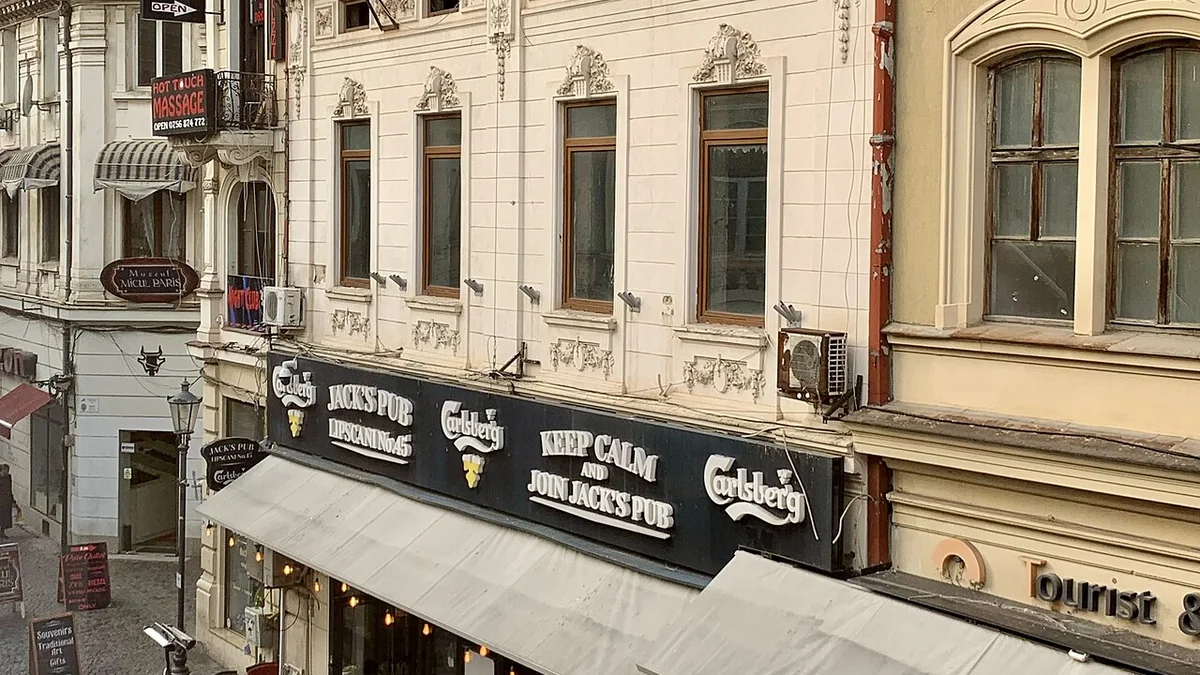
The capital can serve as an arrival base and a place worth visiting in its own right. Put its sights into connected areas. The Bucharest guide separates Old Town, the Palace and northern outings so you can choose how much city time to give each.
If the flight lands late, keep the first evening limited to reaching the stay and a meal. Move a major entry to a full day. A booking immediately after landing is vulnerable to delays that have nothing to do with the attraction. The airport guide helps compare the complete arrival chain.
Transylvania: choose towns before day outings
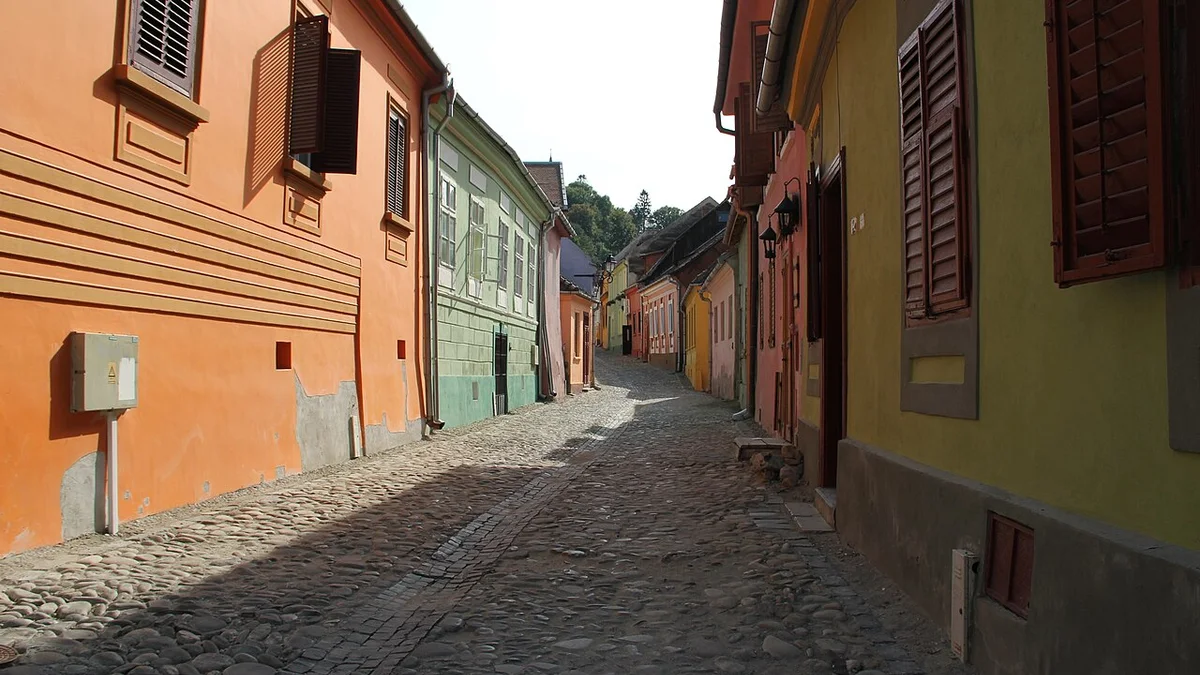
Decide where you will stay before adding every castle and outdoor outing. Brașov can serve a different route from Sibiu or Cluj-Napoca. Moving between them uses time, while returning to one base after every distant outing can also be tiring. Compare both patterns instead of assuming a single base is always simpler.
Use the Transylvania guide and base comparison to choose. Then check each attraction's local access. A train to a town is not proof that a rural sight can be reached conveniently from it. Keep those local legs visible in the plan.
Coast: choose city, resort or both
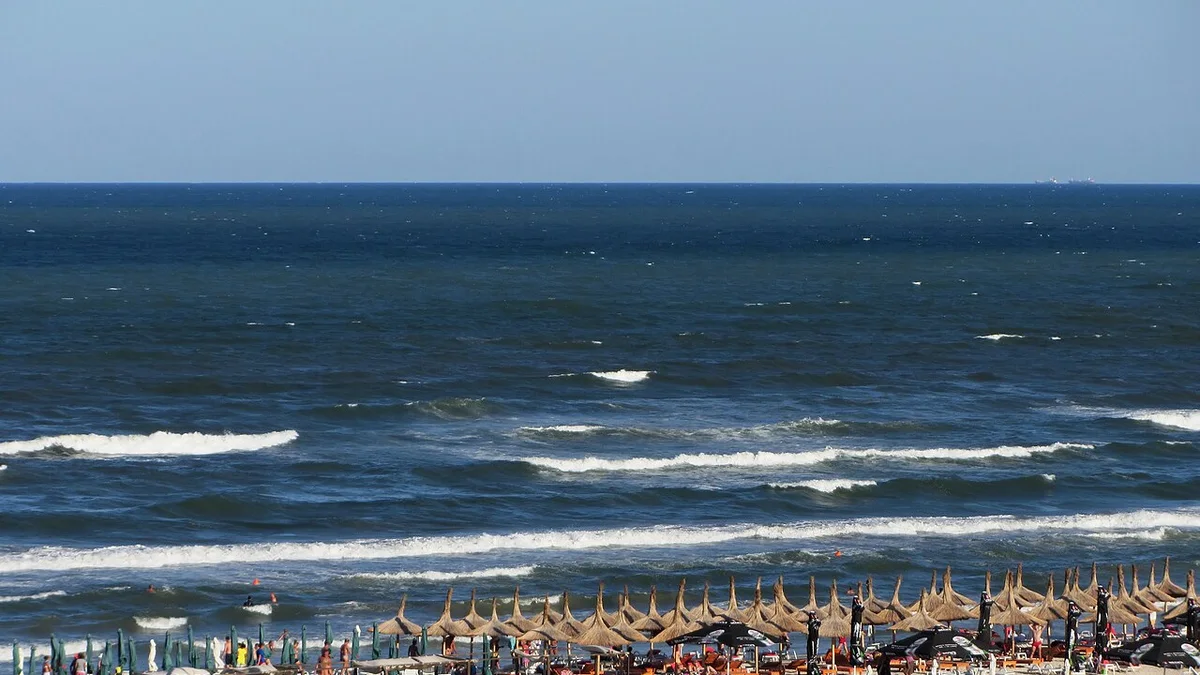
A Constanța visit and a resort holiday are different uses of the coast. Decide whether the waterfront and city are enough, or whether you want several days based near a beach. Then compare the actual resort and stay. A broad coast label can hide a long local transfer.
Use the Black Sea coast guide to choose the place. Then the Bucharest-to-coast route for access. Check the services that operate on your dates. Do not build a swimming holiday from a town-break description.
Delta: book the access chain deliberately
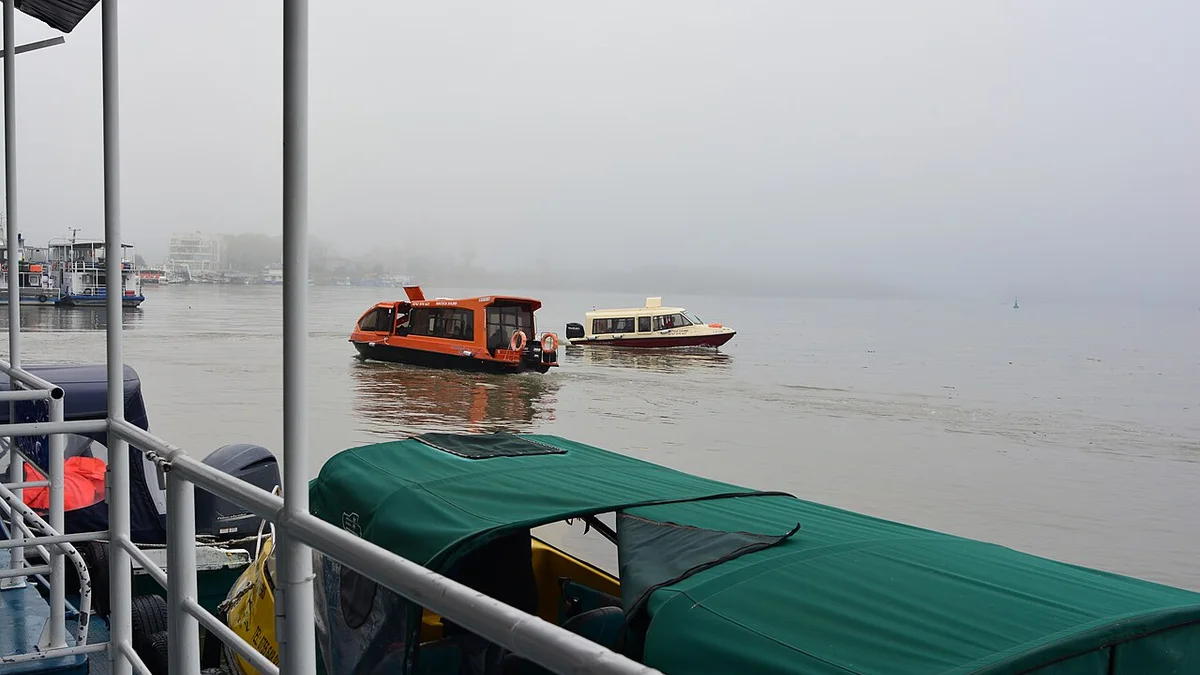
Start with the departure point and the type of stay. A gateway base can suit selected boat outings; a boat-accessed stay needs its own arrival connection. Ask who arranges that leg and what happens if weather affects it. Keep luggage and the return route in the same conversation.
The Delta guide explains the base choices, while the tour comparison separates different boat formats. Do not assume a passenger transport boat provides a wildlife excursion. They can share a waterway while answering different needs.
Choose a route and pace
Prefer a route that gives each base a clear purpose. If a proposed overnight exists only to break a trip, label it that way in your own plan. It may still be useful. It should not be counted as a full place visit.
That distinction keeps the trip from becoming a series of arrivals.
Use the itinerary guide for sample sequences. Treat them as planning options, not bookable packages or guarantees of connection. Enter your dates into the transport search. Check that the actual route can deliver the time at each place that you intended.
Keep one main appointment on a day with a significant transfer. A train arrival, hotel check-in and a casual walk can make a full day without another paid interior. If you add a timed entry, give the connection enough margin. A cheaper fare is less useful when it creates a booking you cannot reliably reach.
Choose where to slow down. A free afternoon in one town can be more useful than an extra stop with only a short visit. Leave room to return to a place you liked or to rest after travel. That time also absorbs changes without forcing the entire route to move.
If the route needs repeated very early starts, decide what to remove. A shorter itinerary can still combine city walks, castle interiors and time outdoors when the bases are well chosen.
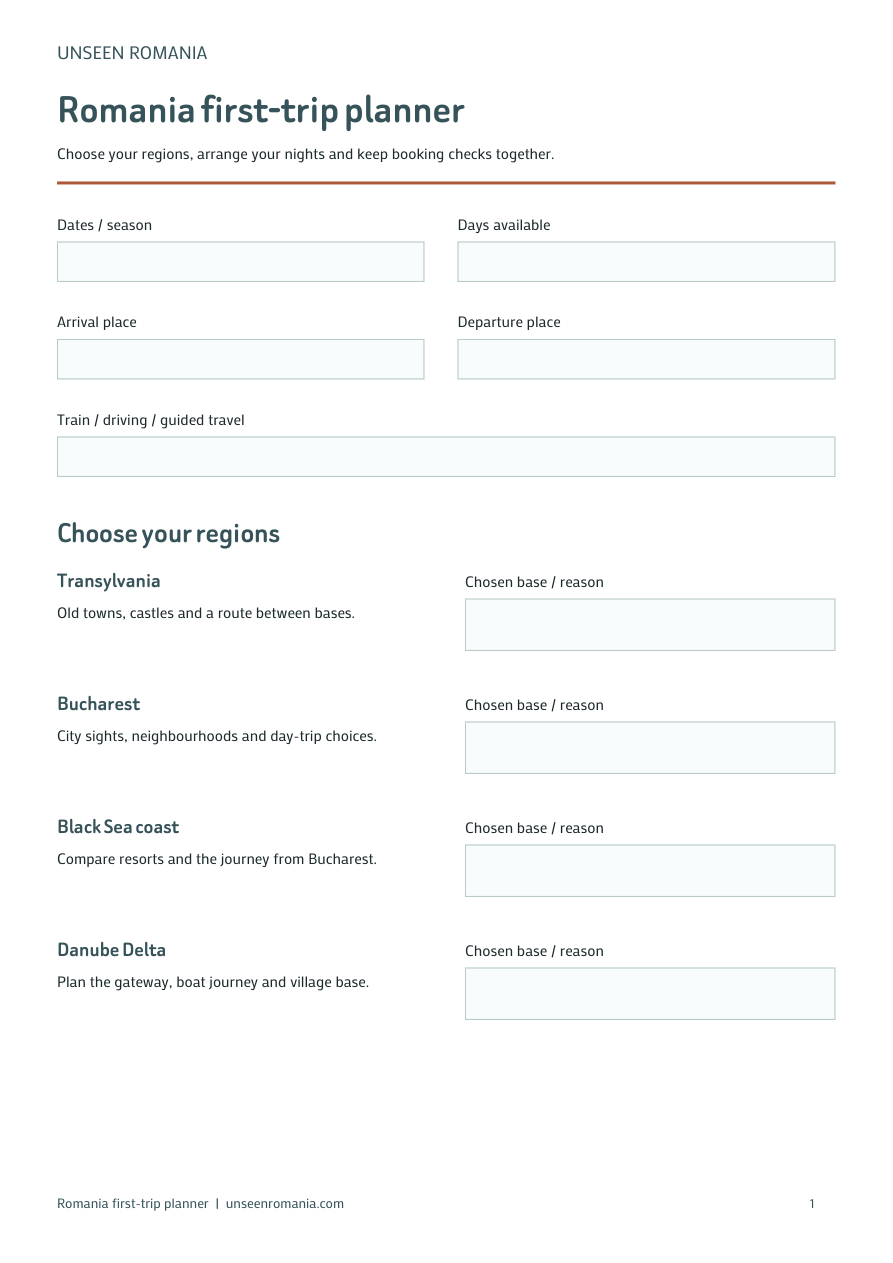
Put your first Romania trip on paper
Choose regions, line up overnight stops and keep your booking checks in one fillable, printable planner.
Decide between rail, driving and a guided circuit
Rail can work for a town-based route where the dated connections fit. Read the train guide for stations, operators and ticket checks. Add local trips to and from stations. A rail fare is not the complete cost or effort of reaching a hotel or attraction.
For a concrete inland example, Transferoviar Călători's timetable puts București Nord to Sinaia at 1 hour 35–37 minutes and București Nord to Brașov at 2 hours 36–37 minutes. Its table lists two outward trains through both towns. These are one operator's services, not the total route frequency. Sinaia and Brașov fit the same rail corridor; Bran still needs a road leg beyond Brașov, while Sibiu requires another intercity journey.
Driving can fit dispersed places and rural stays. Read the car-hire guide before paying, including documents, card rules and permitted routes. Check parking and the road approach at the stay. A car provides flexibility only when its conditions and the roads fit the plan.
A guided circuit can arrange transport and selected nights together. Compare the actual daily route, stay and admissions. Keep the starting point and ending point explicit. A multi-day title does not establish that flights, all meals or every entry are included.
You can combine modes. Use rail between bases, a local excursion for one difficult outing and a shorter hire for a rural section. Compare the full cost and handover effort. A mix is useful when it solves an actual connection, instead of adding complexity without saving time.
For any mode, keep the effect of delay in mind. A flexible walk can move; a boat departure or flight may not. Place the most fragile connection where the preceding day has room. If necessary, add a night in the gateway or departure city instead of asking a tight timetable to carry the whole trip.
Accommodation and booking order
For the capital leg, compare Bucharest hotels.
Book in dependency order. First confirm that entry rules and the broad travel dates fit. Next settle any outing whose access determines where you must be. Then confirm the main connections and nights.
Finally add the smaller visits and meals that can move more easily.
For a Delta stay, the boat access may determine the gateway night. With a castle visit, the official opening day may determine the order of two town nights. For a flight, its departure time may justify a final city night. Identify that controlling detail before paying for the surrounding bookings.
Compare rules for cancelling alongside price. A flexible room can be useful while the transport remains unsettled. Once the route is fixed, a restricted offer may or may not suit your needs. Read the actual deadline and charge instead of relying only on a flexible label.
Keep a record with the provider, dates, guest count, charge currency and booking reference. Add the payment deadline and rules for cancelling. This is for your own use, not another booking system. A clear list helps you see when one booking depends on another and prevents duplicate purchases after a slow email.
For accommodation, read the address and room category. Establish reception hours, late-arrival arrangements and any access needs. A city or resort name does not explain the final leg to the property. Use the local guide to choose an area, then the property's details to choose a room.
Season, entry and everyday costs
Choose dates around the main experience. The season guide compares towns with the coast, Delta and mountains. Use ANM for current warnings instead of treating a seasonal description as a forecast.
For entry and passport rules, use the official guidance for your nationality and needs. The FCDO entry page is for British citizen passport travel, while the Romanian Border Police provides Romanian border details. Other passports and purposes of stay need their own relevant checks.
The safety guide brings together official advice for city, road and outdoor precautions. Read local warnings before a mountain or water outing. A paid booking does not override a closure or authority instruction.
Build costs from the route. The money guide separates charge currency, reference exchange rates and provider fees. Include station transfers, parking and boats where needed. Record refundable security holds separately so you know both the trip cost and the funds you must have available.
Food can be part of the trip without turning every meal into another long trip. Use the Romanian food guide to recognise dishes and ask about ingredients. Then choose a venue near the day's route. A meal's actual menu and preparation matter more than a general national label.
Check whether the plan works as a whole
Read the draft from the first arrival to the final departure without skipping the ordinary parts. On each move, identify when you leave the room, how you reach transport, where bags go and when the next stay can receive you. Those steps often reveal a problem that a list of cities hides.
Look for a day that requires several independent services to line up. A flight, train, local transfer and timed attraction can each be reasonable on its own while making a fragile chain together. Move the casual visit or add a gateway night where it removes that pressure. Keep the booking with the greatest effect protected.
Then read the route as a holiday instead of a logistics exercise. Check that each main place has time without another departure approaching. If not, remove something. A quiet evening or an open morning gives the stay a different quality from a room used only for sleep between transfers.
Check the plan against the people taking it. Walking range, meal needs and tolerance for early starts differ. A long museum day followed by a difficult transfer may be a poor fit even when it is possible on paper. Choose the pace for the actual party and keep enough flexibility for a rest.
Finally, distinguish fixed costs from spending you can still change. A non-refundable booking limits later choices. Read the attraction, transport and accommodation terms together before paying so their dates and conditions fit the same route.
Choose your next planning guide
If you know the places but not the sequence, open the Romania itinerary. It compares a compact inland route with adding coast or Delta time. Use it before booking nights, while the order can still change without a fee.
If the route is clear but transport is uncertain, compare trains, car rental and guided circuits. Choose from complete trips and conditions. Avoid making one mode a rule for every part of the country.
If the date is the main uncertainty, use when to visit. If payment is the issue, use currency and costs. For current precautions and documents, use safety. Each resolves a different booking decision.
So start with the one holding up your route.
Once those decisions are settled, return to the regional guide for the places you will actually visit. Read the attraction guide before buying its entry, and keep the official source with the booking. This order reduces the chance of buying a good-looking offer for a place you cannot fit into the trip.
Keep the last day simple
Plan the complete final journey from your room to the airport or station, including the airline's check-in margin. If departing from a different city, use it on the final accommodation and transport bookings.
Keep a flexible final visit near the stay if time allows. A short walk can be shortened after a slow breakfast or luggage collection. A distant excursion cannot be shortened as easily once you have left. Choose the final day for a clear departure instead of an attempt to recover every omitted sight.
If an intercity move must happen before the flight, inspect what a delay would mean and compare a previous-night arrival. The extra night may alter costs. It can also simplify the final chain. Make that choice from the actual services and effects, instead of assuming a scheduled arrival is guaranteed.
Questions about Romania travel planning
What is a good first route?
Choose Bucharest and one main region, with enough nights to enjoy the bases you select. Towns and castles may lead you toward Transylvania; beaches or waterways produce a different route. Check actual connections before adding another region. A first trip does not need to cover every experience in the country to feel complete.
Should I book accommodation before transport?
Check that the important transport and access plans work before paying for fixed nights. A flexible room can hold a workable plan while details settle, but read its actual terms. For a boat-accessed stay or an early departure, the connection may determine the night you need. Book those dependencies together.
Can I combine Transylvania with the Delta?
You can plan a holiday containing both if you allow real transfer time and useful nights in each. They are not neighbouring stops on one easy sightseeing loop. Compare which part you would shorten to add the second region. If it leaves both rushed, choose one and keep the other for another trip.
Is a hire car necessary?
Not for every itinerary. Rail-connected towns can work with local transport or selected excursions, while dispersed rural stops may favour a car. Compare actual connections and contract conditions before choosing. A shorter rental for one part of the route can be worth examining alongside a whole-trip hire or an entirely rail-led plan.
Verdict on a workable first trip
Make Romania travel planning a sequence of clear choices: main experience, bases, connections and bookings. Give transfers their own time and keep the least flexible outing visible. Then add the small visits around a route that works. A compact plan with room to use each place is stronger than an itinerary that only reaches it.