
Bucharest
Where to Stay in Bucharest Old Town and Nearby Areas
We may earn a commission from some links on this page.
The short answer
Old Town suits a visit centred on its lanes and evening venues.
What's covered11
- 1. Hilton Garden Inn Bucharest Old Town
- 2. InterContinental Athénée Palace Bucharest
- Does an Old Town stay suit you?
- Compare the central areas by daily use
- Read the area map with your arrival in mind
- Read hotel terms before choosing a room
- Quiet, access and luggage checks
- Choose the base after sketching your days
- Check the booking once more before arrival
- Questions about where to stay in Bucharest Old Town
- Verdict on a central base
By Unseen Romania · Updated
1. Hilton Garden Inn Bucharest Old Town
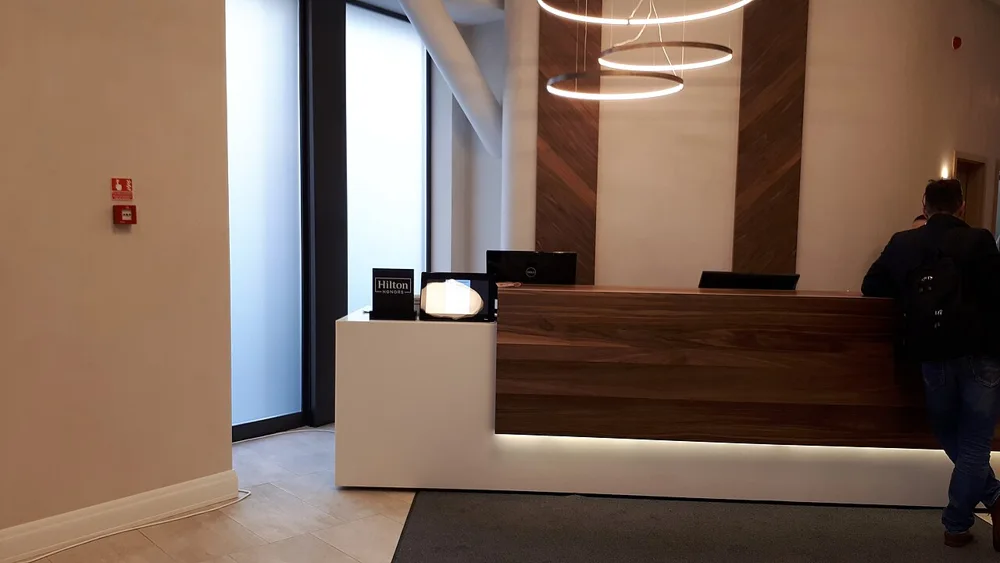
Hilton's official location page gives the address as 12 Doamnei Street. That places this candidate in the Old Town comparison, instead of requiring you to infer the location from its name. It suits someone who wants to examine a branded hotel in the historic central area.
The official location page confirms the address and states that an airport shuttle is not available. Plan the arrival separately instead of assuming a hotel with an airport listed on its website includes a transfer.
Compare the actual room and rate for your dates. Check whether breakfast is included, when payment is taken and the deadline for cancellation. A flexible and a non-refundable rate at the same property are different offers. The room name alone does not establish those terms.
Limitation: the Old Town location is a reason to compare it, not proof that every room is quiet or that a vehicle can stop exactly where you expect. Ask about the room's position and the arrival route. Choose it only when the exact booking terms fit your trip.
2. InterContinental Athénée Palace Bucharest
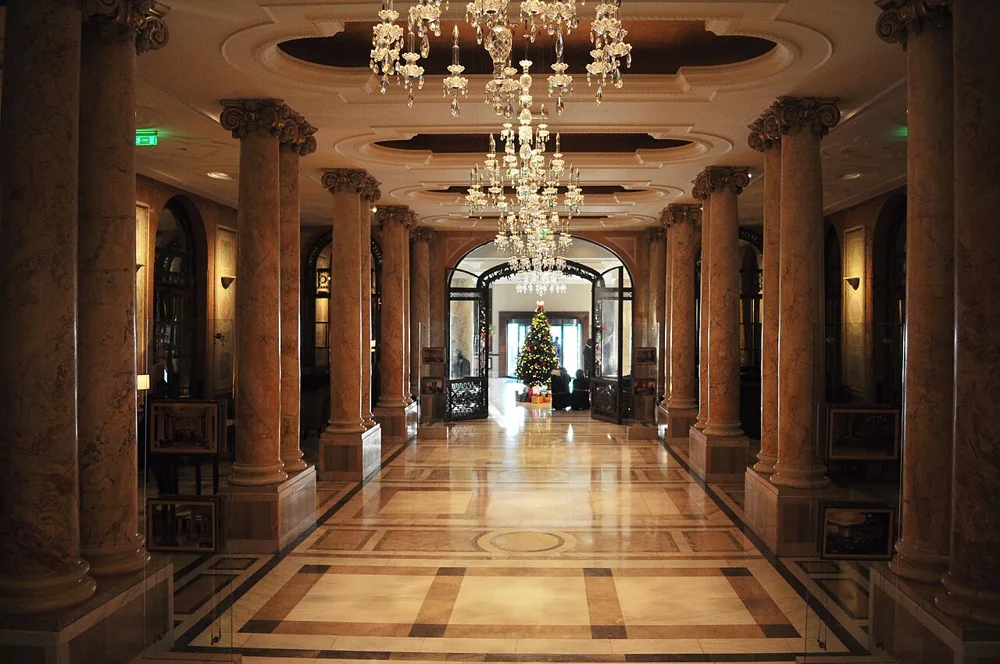


IHG's official property page gives the address as Episcopiei 1–3, by the Athenaeum area. It is a useful comparison with staying inside Old Town. Choose it for a visit that puts the concert hall and Calea Victoriei side of the centre high on the list, instead of treating it as the same location as the old lanes.
The official hotel page confirms the address and property details. Its transport page states that an airport shuttle is not available. Check the actual arrival route alongside the room booking.
Compare room categories and meal inclusions on the dated rate you select. If you want a chosen facility, read its current access conditions. A facility shown in a hotel gallery does not establish that every room rate includes every service.
Limitation: this is a different central base. So allow for the walk or ride back from an evening in Old Town. Its location may be a better fit for some itineraries and less useful for others. Do not pay for a larger set of facilities unless you expect to use them.
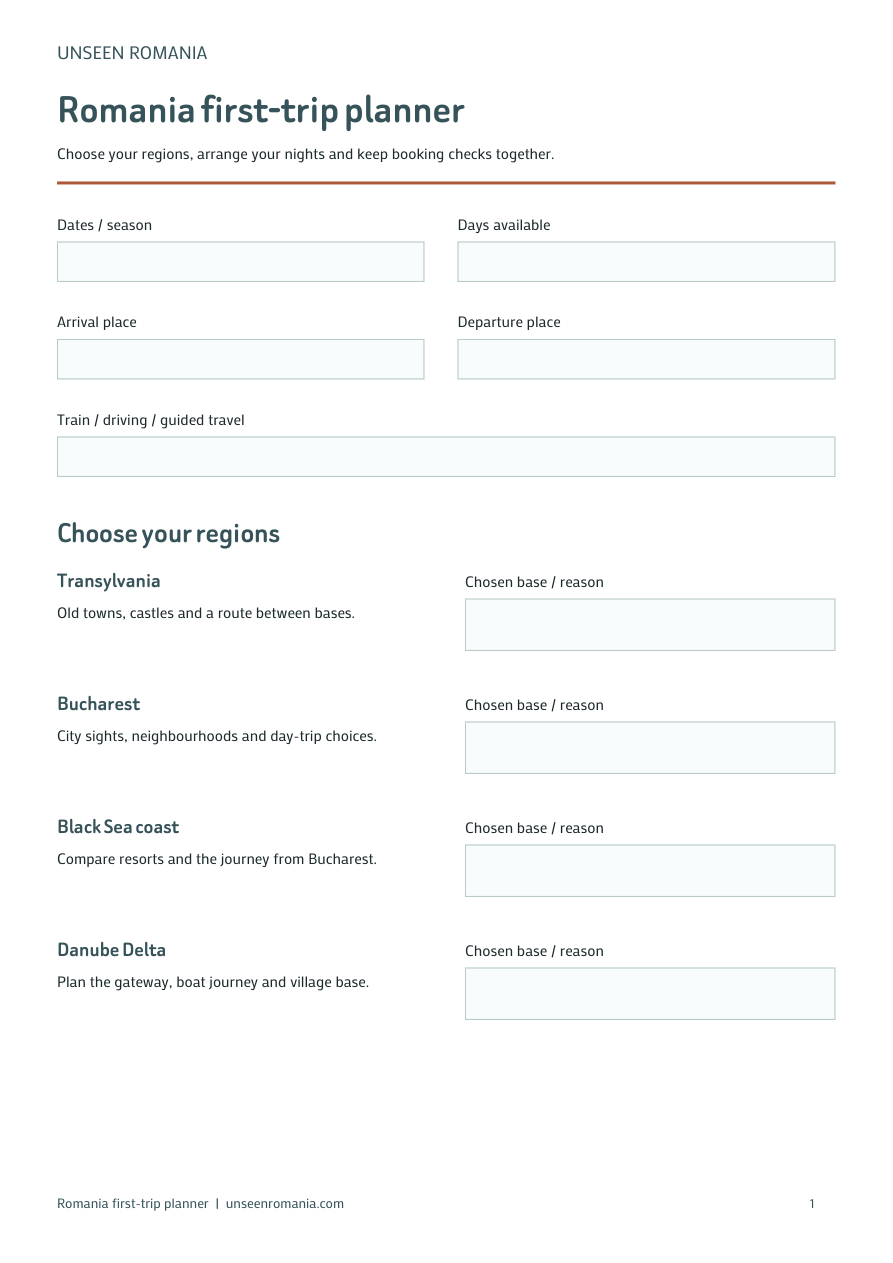
Put your first Romania trip on paper
Choose regions, line up overnight stops and keep your booking checks in one fillable, printable planner.
Choosing where to stay in Bucharest Old Town starts with a question about your evenings. Stay within the old streets if walking to restaurants and nightlife matters most. Compare Universitate or the Athenaeum area if you want a central base with a different street setting. Then check the room itself, because an area label cannot promise quiet or easy access.
Does an Old Town stay suit you?
Old Town is a sensible choice when you expect to use the area repeatedly. You can finish a walk, return to the room and go out for dinner without another cross-city trip. That matters more on a short break than a long list of hotel facilities you may never use.
The same location can work less well if you want early nights. Check the chosen street and the room's position in the building. A room facing an internal courtyard may differ from one facing a late-night venue. Read recent comments about noise.
Then ask the property a direct question if quiet is central to the booking.
Do not assume that a hotel marked Old Town sits inside the narrow historic lanes. Booking maps can use broad area names. Look at the official street address and compare it with the places you plan to visit. Save the actual entrance, particularly if the building has several doors or reception is separate.
Old Town is also only one part of Bucharest. If your plans centre on northern parks, a chosen business venue or repeated rail trips, another base may save time. Use the city guide to choose the outings first. A good stay decision follows the visit you want, instead of forcing every day around a fashionable address.
Compare the central areas by daily use
These area comparisons describe how the location may fit a trip. They are editorial judgments, not guarantees about every property. Use them to narrow the map. Then inspect individual hotels and their actual terms.
| Area | Best fit | What to check on the map | Main compromise |
|---|---|---|---|
| Old Town core | Historic streets, restaurants and evenings nearby | Actual entrance and access from a vehicle drop-off | Street noise and the last walk with bags |
| Universitate and the northern Old Town edge | A central base for different city directions | Station exit, crossings and the route into the old streets | Major roads can separate apparently close addresses |
| Calea Victoriei and the Athenaeum | Museums, the concert hall and avenue walks | Distance from the exact property to useful transport | More walking back from the southern Old Town streets |
| Romană and nearby central streets | Dining and a central base beyond the old lanes | The route to the station and your main sights | The area name can cover quite different street settings |
| Gara de Nord | Early trains or a stay built around rail travel | Station entrance, luggage route and city connection | Less immediate access to the historic centre |
Scroll for more →
Old Town core: convenient evenings, street-specific noise
Choose the core when the old streets are where you want to spend time. It can be useful to return to your room between an afternoon walk and dinner. Check whether the street permits the vehicle access you expect. A transfer may stop nearby instead of at the entrance.
Read the hotel description for the exact room category. Windows, room size and bed setup can differ within one building. A large shared lobby does not tell you how much space the room has. If you need a lift, confirm that it reaches the floor and room you are booking.
For the surrounding walk, use the Old Town guide. It helps you distinguish a base for sightseeing from a base for nightlife. Both can be valid choices. They do not always suit the same guest.
Universitate: compare the real route across the roads
Universitate is worth comparing when you want access to both the old streets and the wider centre. Use the station and major junction as reference points. Then look closely at the property's side of the road. A map can make addresses on opposite sides look equally convenient.
Walk the final route on a street map before booking. Check the crossings, station exits and any steps that matter to you. If arriving at night, ask the property about the entrance and reception plans. A clear arrival is more useful than an area description that says everything is nearby.
This area can suit a visit with different places each day. Still, compare the actual trip to your main museum or Palace visit. Centrality is useful only when it reduces the trips you will really make.
Athenaeum and Calea Victoriei: a different central setting
This area suits visitors who expect to spend time along Calea Victoriei or attend a performance. Consider it as an alternative to the narrow Old Town streets. Include the walk back from Old Town when planning evenings.
Check the nearest useful transport stop, instead of the nearest stop of any kind. A station may be close but require a transfer for the outing you repeat most. The Metrorex map shows the network connections.
If attending a concert, compare a meal near the venue with returning to the hotel first. A base chosen for that evening can make the whole day easier. For a stay without that interest, another central street may work just as well.
Read the area map with your arrival in mind
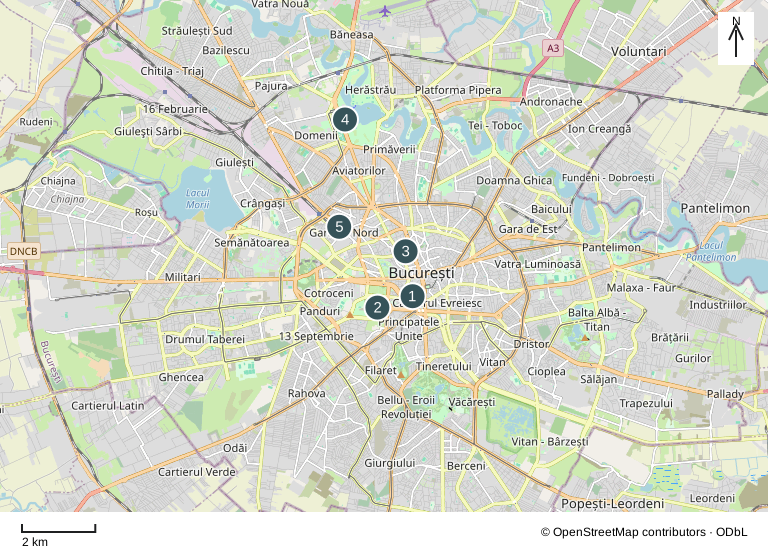
- Old Town.
- Palace area.
- Athenaeum and nearby stay area.
- Northern museum area.
- Gara de Nord.
North and scale are shown on the map.
Plot three points: the hotel entrance, your main arrival stop and the first sight you want to visit. Trace the walking route between them. This reveals useful differences that a broad shaded district on a booking map may hide. Keep road crossings and luggage in the decision.
From Henri Coandă, the train reaches Gara de Nord. So a central hotel still needs a city connection. A bus route can fit a different part of the centre. A private pickup needs an agreed address and legal drop-off.
The airport transport comparison weighs those complete chains.
For a rail departure, check the trip back to the station at the time you expect to travel. Breakfast, luggage collection and the final station entrance all use time. A hotel farther from the station may still fit. It needs a realistic departure plan.
Do not book a city-centre rental car merely to reach the hotel. Compare public transport and a transfer for arrival. Then collect a car when the wider route needs it. Parking and vehicle access are separate hotel conditions.
Ask about them before choosing a rate if you will have a car.
Read hotel terms before choosing a room
Compare Bucharest hotels against the areas above.
Start with the total for the whole stay and the actual guest count. Check whether displayed amounts include the taxes and charges that apply. Read the currency of the charge and when you pay. A figure shown in your home currency may be an estimate instead of the currency the property will charge.
Then compare the rules for cancelling. Save the exact deadline with its local time zone and the fee that applies afterward. If your flights are not settled, flexibility may matter more than a small saving. Do not assume a cancellation policy shown on one rate applies to another room at the same hotel.
Read the bed configuration, occupancy limit and bathroom description. A request for twin beds may remain unconfirmed. Book a twin category or get written confirmation if separate beds are essential.
For late arrival, tell the property when you expect to reach it and ask how entry works. A flight arrival time is not a hotel arrival time. Bags and transport can add a longer gap. If you will arrive after normal reception hours, confirm the steps before travel.
If you use a booking agent, establish who handles amendments and cancellation. Save the reference and hotel's address offline. If a confirmation email is slow, inspect the original booking's status before making another reservation.
Quiet, access and luggage checks
Ask about quiet in terms of the actual room. “Is the area quiet?” can produce a broad answer that misses the detail you need. Ask whether the room faces a busy street or an internal space, and whether nearby venues operate late. Recent guest comments can help you identify the right question.
They are not a guarantee.
For step-free access, trace the entire path from the street to the room. Ask about entrance steps, lift dimensions and bathroom access where relevant. Confirm the room category with the required features. A property-level label does not answer every mobility need.
Check luggage storage if your arrival and room access do not line up. Ask whether storage is available on departure day as well. Then plan collection before the airport or station trip. A late checkout and luggage storage are different services.
So do not assume one includes the other.
If travelling with children, enter their ages in the booking. Establish the bed and cot arrangements for your room. A family-friendly label does not explain its capacity or layout.
Choose the base after sketching your days
Write a small outline before paying: arrival, central walk, main interior, northern outing and departure. Mark where you will be at dinner each day. A hotel that reduces repeated travel across that outline is likely to serve the trip better than one selected only for a famous neighbourhood.
Use the three-day itinerary to compare a typical central stay. If you plan an excursion, check the day-trip meeting or departure points as well. A hotel pickup claim needs checking against the actual booking, not the general district.
For a wider holiday, compare moving to Transylvania with returning after each outing. The Romania itinerary helps place the capital at the start or end of the route. Set that sequence before booking accommodation so you do not pay for unused Bucharest nights.
Check the booking once more before arrival
Confirm that the dates and guest count still match the transport plan. Save the entrance instructions and the contact route with the booking. If the flight has moved, update the expected arrival through the original booking channel. Keep the reply instead of assuming that a note sent to a general inbox has reached reception.
Read the check-in requirements and any balance due. A room paid through a booking agent may still have separate charges listed on the confirmation. Keep that breakdown so you can distinguish them from a duplicate room payment.
Questions about where to stay in Bucharest Old Town
Is Old Town best for a first trip?
It is convenient if your plans centre on its streets and restaurants. Compare the exact room's noise and arrival access before booking. Universitate or the Athenaeum area may fit a broader city visit better. There is no need to stay on a bar street merely to keep the historic centre within reach.
Can I rely on the hotel's airport shuttle?
Only when the property confirms an actual service for your booking. The two hotels discussed here state on their official transport pages that an airport shuttle is not available. Arrange arrival separately. Check the airport code, pickup point and final address if using a private transfer, including any street access limit.
Should I stay near Gara de Nord?
Compare it when early trains or repeated rail trips dominate the visit. For a short sightseeing break, weigh that convenience against the extra city travel to central attractions and evenings. Check the actual station approach and hotel entrance. A rail-focused base can fit well, but the station name alone is not a quality recommendation.
Is a refundable rate worth paying for?
It can be useful when flights, the wider route or your plans may still move. Compare the actual difference with the last date to cancel and fee. A flexible label still has conditions. Save those terms when booking, and check the payment currency and the displayed total before deciding.
If the Palace visit is a priority, compare the route from the hotel to the confirmed visitor entrance. A broad central label is less useful than that actual connection.
Verdict on a central base
Choose where to stay in Bucharest Old Town by how you will use it. Keep the core for repeated walks and evenings there; compare nearby central areas for a different setting. Then choose an actual room with clear terms and access. A hotel that fits your route will do more for the visit than a district label alone.
Put your first Romania trip on paper
Choose regions, line up overnight stops and keep your booking checks in one fillable, printable planner.